
Public Play · Golf Trips from Chicago
Erin HillsErin
Walking-only U.S. Open course in Wisconsin's Kettle Moraine, about two hours' drive from O'Hare.
Par
72
Yardage
7,772
Rating · Slope
78.1 · 146
Holes
18
Green Fee
$435–$555
The Course
About Erin Hills
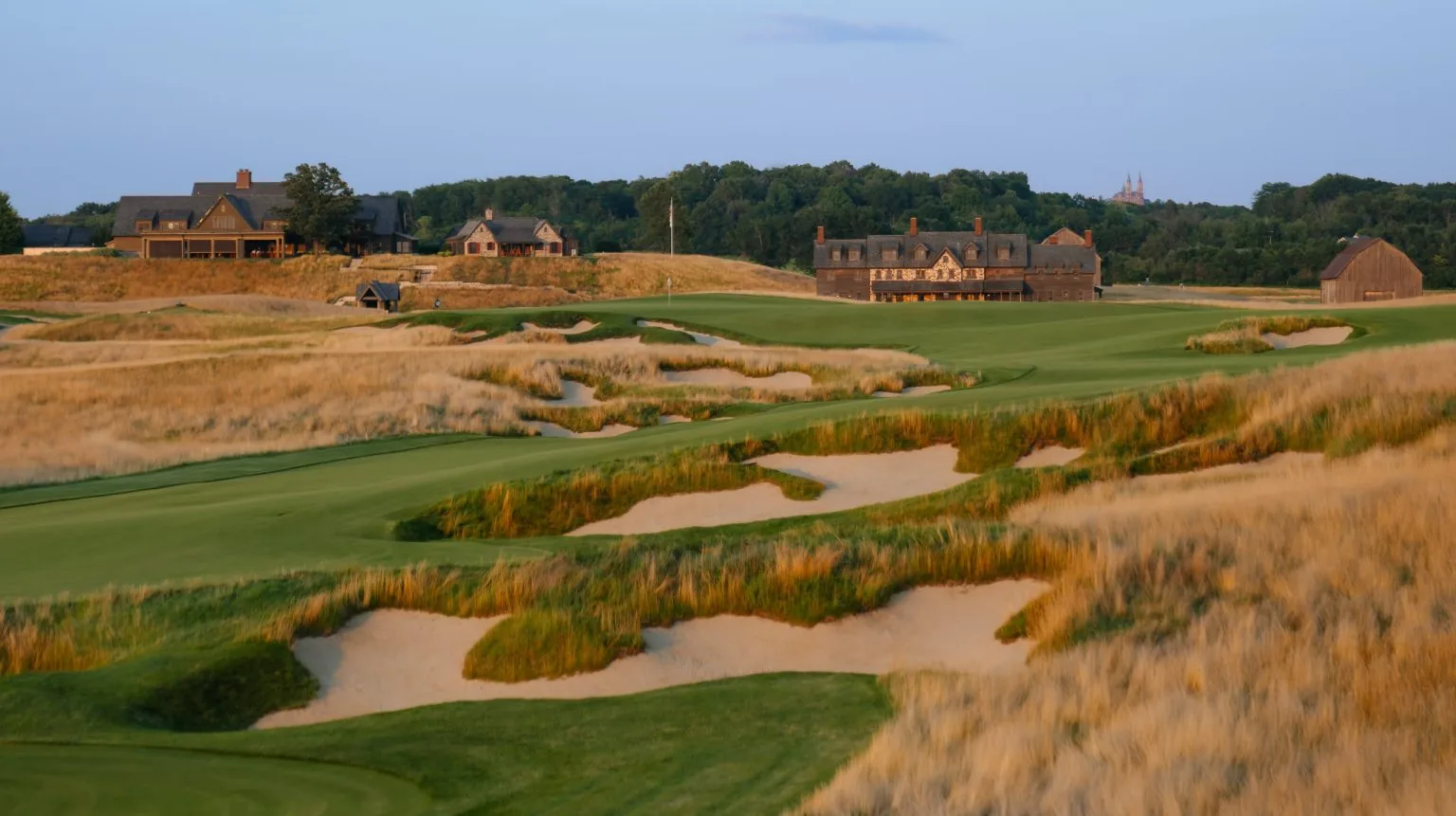
Glacial ground, wide fairways and walking only: Erin Hills is a public course with no memberships on 652 acres about 35 miles northwest of Milwaukee and roughly two hours by car from O'Hare. From Chicago it is an overnight trip or a very long day, and the property has its own lodge rooms and cottages. Play is on foot only, with a caddie or carrying your own bag; pull carts are not allowed. Expect blind tee shots and greens ringed by short grass.
History
Erin Hills — History
Erin Hills opened in 2006, designed by Michael Hurdzan, Dana Fry and Ron Whitten. Andy Ziegler bought it from founder Bob Lang in October 2009. It hosted the 2008 U.S. Women's Amateur Public Links, the 2011 U.S. Amateur and the 2017 U.S. Open, won by Brooks Koepka, where Justin Thomas set the competitive record of 63. The fairways were converted to bentgrass in 2020, and Maja Stark won the 2025 U.S. Women's Open here.
Design
Erin Hills — Design
The architects took a minimalist approach on land shaped by retreating glaciers, moving little earth and routing fairways around the property's natural contours, the club says. The ground is glacial till of sand and small rock, and the firm turf plays shorter than the card. Greens range from 3,800 square feet at the 2nd to 10,900 at the 7th, and The Fried Egg notes that every one is surrounded by short grass, so a slight miss can run well away.
What Sets It Apart
Why Play Erin Hills
In 2017 Erin Hills became the sixth public-access course to host the U.S. Open, and in 2025 it added the U.S. Women's Open, with more USGA championships scheduled through 2039.
The Round
The Journey at Erin Hills
I.
The Opening
The round opens with a 552-yard par 5, then the 361-yard 2nd: a brave drive down the blind left side, or a safer one right that leaves a semi-blind approach to the smallest green on the course. The 476-yard 3rd, the No. 1 handicap, was the hardest green to hit at the 2017 U.S. Open. The 445-yard 4th narrows the farther you drive, and the 462-yard 5th flows over natural contours that can kick a found fairway well forward before the 237-yard 6th.
II.
The Middle
The 607-yard 7th is a rolling three-shot par 5 with three bunkers short and left, a false front on the right and the largest green on the course, stepping down side to side. The 492-yard 8th doglegs left against a fairway sloping right, with no fairway bunkers. The 163-yard 9th is the shortest hole, a small green falling away on most sides. The 504-yard 10th starts with a blind drive downhill to a wide fairway and a shallow green bunkered right.
III.
The Finish
The 212-yard 13th plays hill to hill to a green about 20 yards below the tee, with a swale feeding a big bunker left. The 613-yard 14th tempts a second shot at a false-fronted green with a big bunker front right and a river to the right; the lay-up leaves a nearly blind pitch. The 370-yard 15th was drivable at the 2017 Open. The 481-yard 17th hides its green behind a hill on the left, and the 663-yard 18th has a centerline bunker where players lay up.
How to Play It
Erin Hills — Playing Strategy
Beginner / High Handicap
Take a caddie: the course is walking only, blind tee shots are common and a good line saves strokes. Choose a tee set that fits your game, since the Black tees run 7,772 yards. Play the par 5s as three comfortable shots, and around the greens putt from the short grass whenever you can instead of chipping.
Intermediate / Mid Handicap
Much of the trouble sits beside the greens. At the 2nd and 10th the safer drive leaves a semi-blind or blind look, so trust the caddie's line. Avoid the bunkers short and left on the 7th and the swale left on the 13th, and drive down the right on the 17th to see the green. At the 18th, pick your side of the centerline bunker early.
Advanced / Low Handicap
From the Black tees (78.1/146) length is only half the test. The 3rd was the hardest green to hit at the 2017 Open, and the 8th favors a draw against the fairway's slope. The 14th is the eagle chance if you can carry the false front and miss the front-right bunker. Miss the 7th green right, not left, and weigh a drive at the 15th's shallow, elevated green.
Signature Holes
Erin Hills — Signature Holes
The Card
Erin Hills Scorecard
| Hole | 1 | 2 | 3 | 4 | 5 | 6 | 7 | 8 | 9 | Out | 10 | 11 | 12 | 13 | 14 | 15 | 16 | 17 | 18 | In | Total |
|---|---|---|---|---|---|---|---|---|---|---|---|---|---|---|---|---|---|---|---|---|---|
| Par | 5 | 4 | 4 | 4 | 4 | 3 | 5 | 4 | 3 | 36 | 4 | 4 | 4 | 3 | 5 | 4 | 3 | 4 | 5 | 36 | 72 |
| Yards | 552 | 361 | 476 | 445 | 462 | 237 | 607 | 492 | 163 | 3,795 | 504 | 423 | 464 | 212 | 613 | 370 | 247 | 481 | 663 | 3,977 | 7,772 |
| Handicap | 3 | 13 | 7 | 11 | 9 | 15 | 1 | 5 | 17 | — | 4 | 14 | 10 | 18 | 2 | 12 | 16 | 8 | 6 | — | — |
Good to Know
Erin Hills — questions answered
- How do I book a tee time at Erin Hills?
- Erin Hills takes tee-time bookings directly on its own website. Golf in CHI links the course's booking page on this listing.
- How much does it cost to play Erin Hills?
- Green fees at Erin Hills are typically $435 to $555, varying by season, day of week and time. 18-hole green fee, walking only; caddie fee extra.
- Who designed Erin Hills?
- Erin Hills was designed by Michael Hurdzan, Dana Fry and Ron Whitten and opened in 2006.
- What is the par and yardage at Erin Hills?
- Erin Hills plays to a par of 72 over 7,772 yards from the championship tees, with a course rating of 78.1 and a slope of 146.
- Is Erin Hills public or private?
- Erin Hills is open to public play. Tee times can be reserved in advance.
- Where is Erin Hills located?
- Erin Hills is located at 7169 County Road O, Erin, WI 53027, in the Golf Trips from Chicago area of Chicagoland.
More in Golf Trips from Chicago
More golf courses in Golf Trips from Chicago
Robert Bruce Harris · Lake Geneva
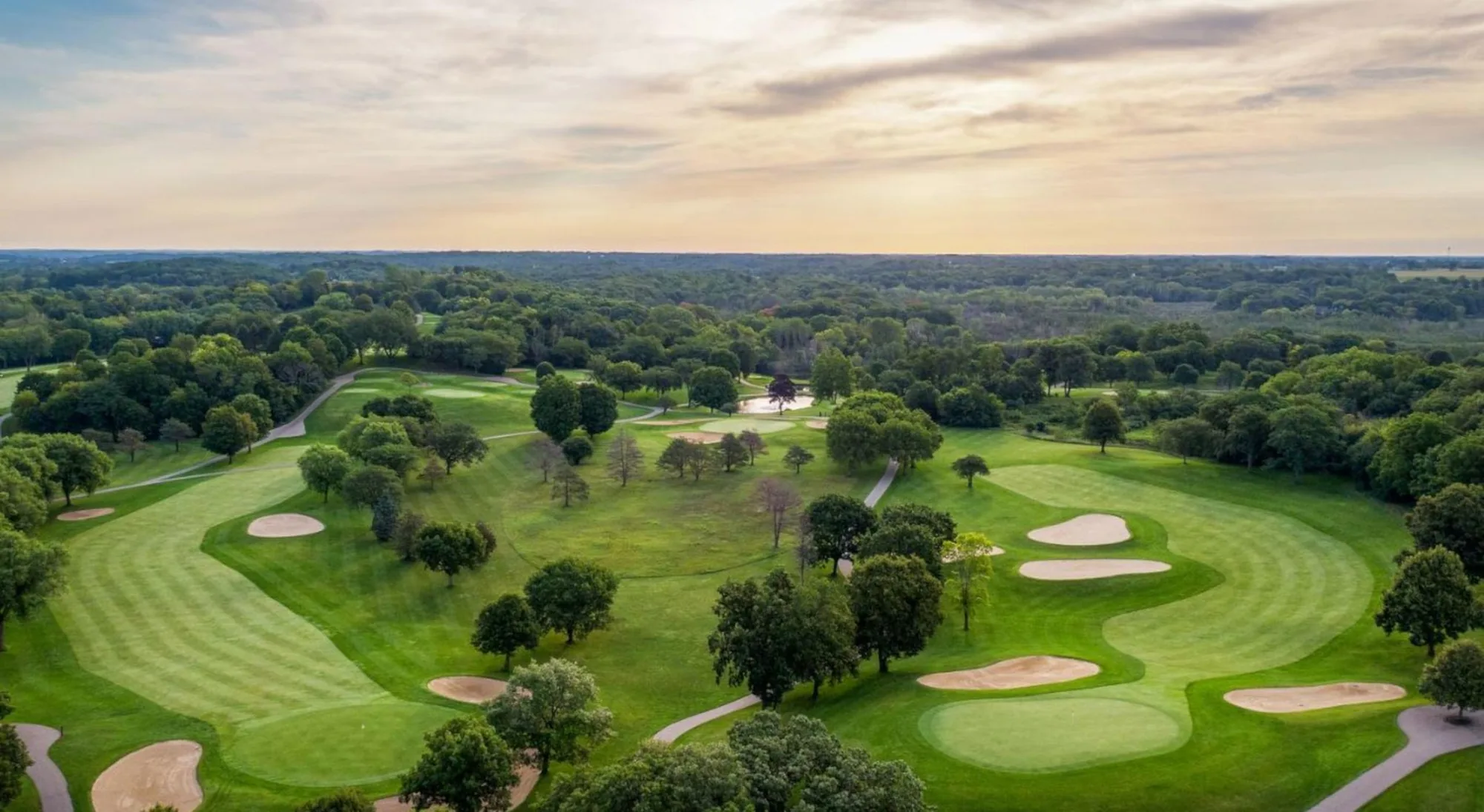
Grand Geneva Resort — The Brute
Robert Bruce Harris's big-bunkered resort course at Grand Geneva in Lake Geneva, Wisconsin.
Pete Dye and Jack Nicklaus; reworked by Bob Cupp · Lake Geneva
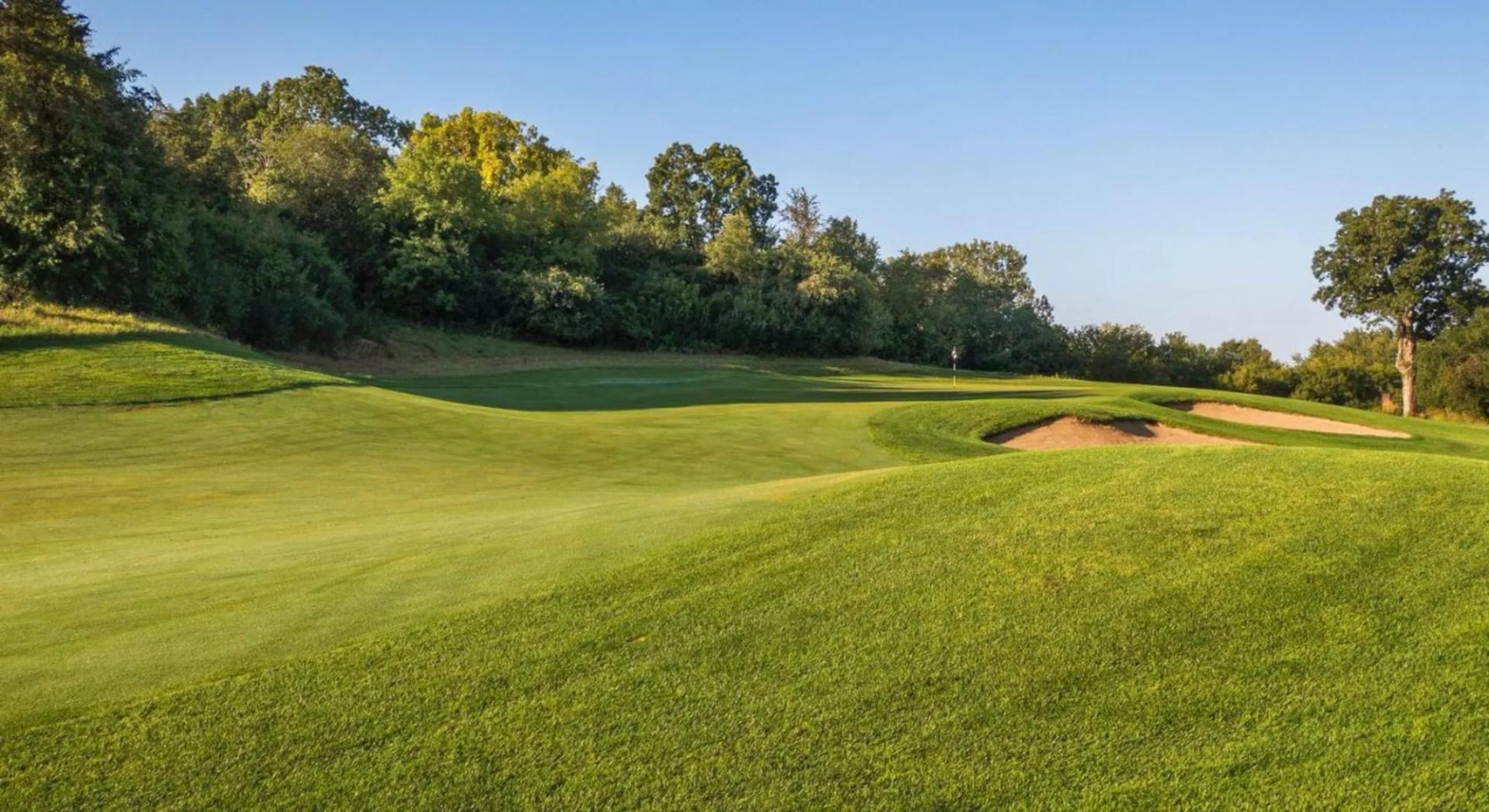
Grand Geneva Resort — The Highlands
The Highlands at Grand Geneva: a Dye-Nicklaus original, reworked by Bob Cupp, in Lake Geneva, Wisconsin.
Pete Dye · Kohler
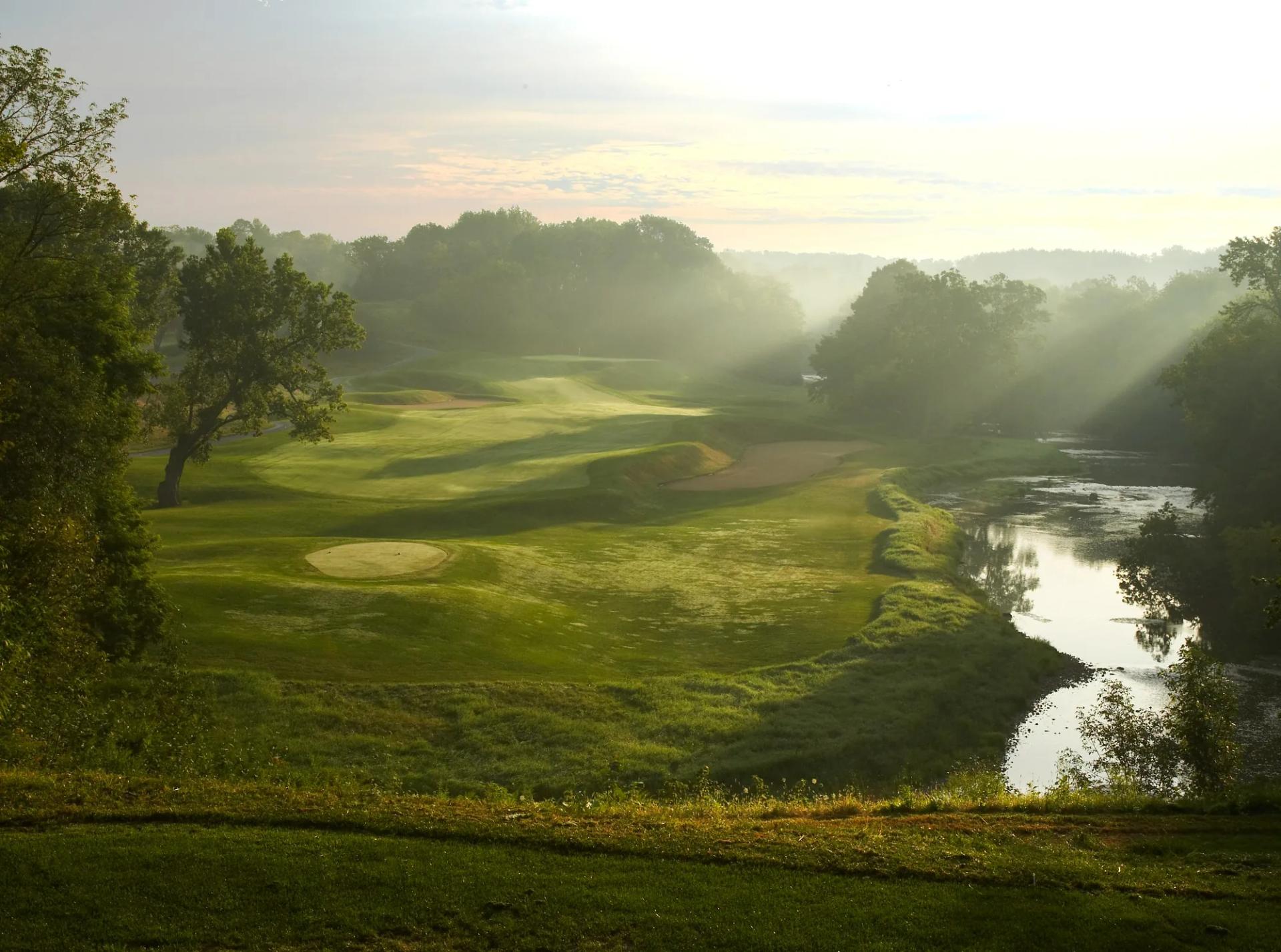
Blackwolf Run — River Course
Pete Dye's River course at Blackwolf Run, following the Sheboygan River valley in Kohler, Wisconsin.
How to Play It
Book a Tee Time at Erin Hills.
Erin Hills takes its tee sheet directly — book your round on the club's own site.
Golf in CHI is an independent guide — we don’t sell tee times or mark them up. We map the exact way on.