Invitation & Access · North Shore
Bob O'Link Golf ClubHighland Park
C.H. Alison's 1925 rebuild of a Donald Ross course, a private club in Highland Park.
Par
71
Yardage
7,247
Rating · Slope
75.6 · 141
Holes
18
Green Fee
Members only
The Course
About Bob O'Link Golf Club
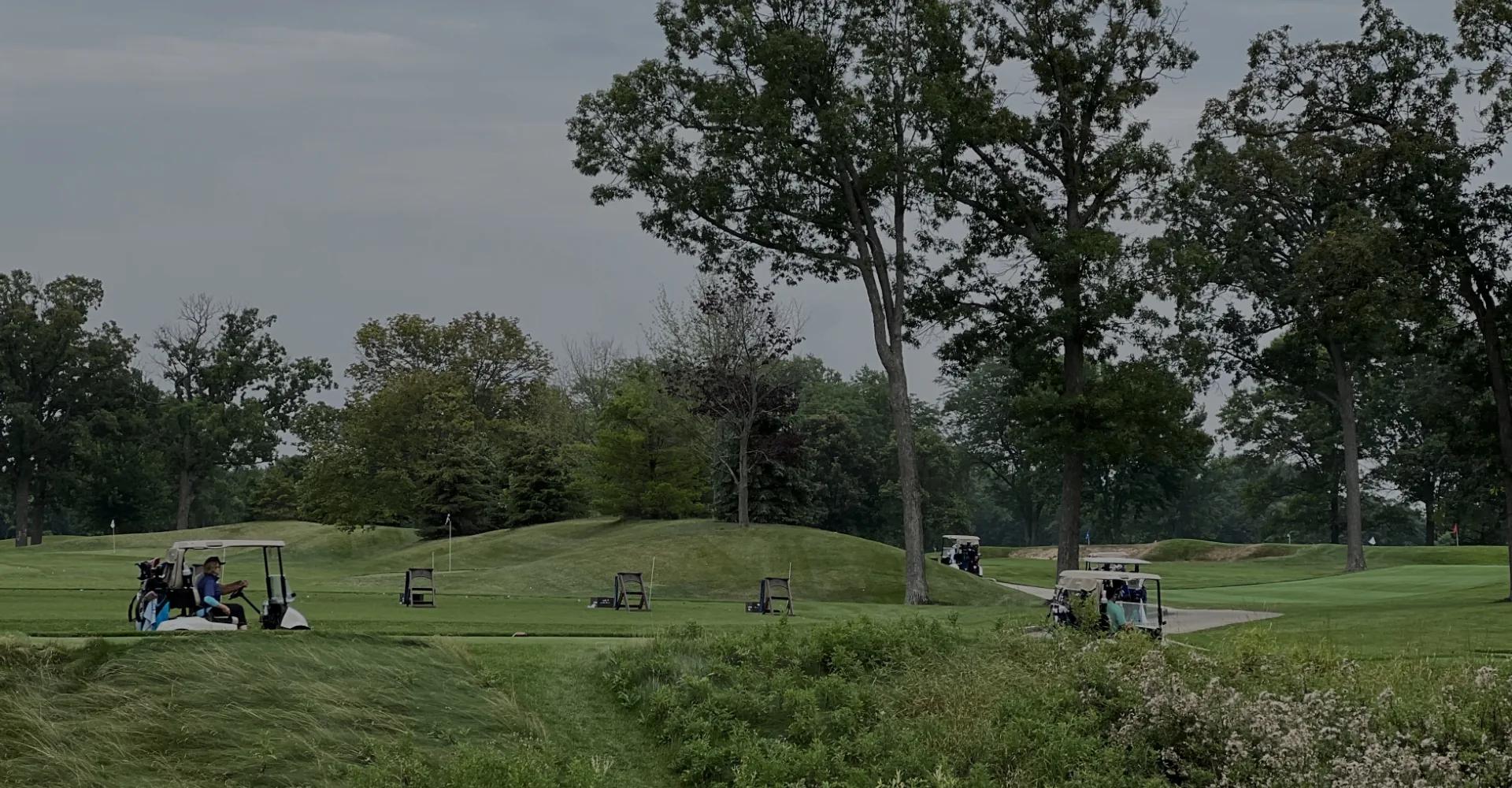
Play at Bob O'Link is for members and their guests; the club publishes nothing about membership, and its website is a member login. The course is a C.H. Alison design from 1925 on flat ground beside the Skokie River, restored by Jim Urbina and reopened in 2016. From the Green tees it measures 7,247 yards, par 71, rated 75.6 with a 141 slope, with six par 4s of 455 yards or more.
History
Bob O'Link Golf Club — History
Donald Ross laid out the first course in 1916 on 110 acres. After the club bought 50 more acres west of the Skokie River, C.H. Alison of Colt, MacKenzie and Alison redesigned it in 1924, and the Alison course opened on July 4, 1925. In 2015 the members approved a Centennial Initiative led by Jim Urbina, the biggest project since Alison's, and the course reopened in June 2016.
Design
Bob O'Link Golf Club — Design
Alison built contour into almost dead-flat ground with massive green complexes and large bunkers that hold up the raised greens, Urbina said in a 2018 interview. Guided by a 1939 aerial photograph, the restoration rebuilt 60 original Alison bunkers, recaptured lost fairway, removed trees that had choked the turf and rebuilt every green to USGA specifications while keeping Alison's shapes. Two greens altered in earlier work were reshaped to match the other 16.
What Sets It Apart
Why Play Bob O'Link Golf Club
The club's agronomy department counts it among only 33 Colt and Alison courses left in North America and, since the 2016 reopening, one of the best representations of C.H. Alison's work in the U.S.
The Round
The Journey at Bob O'Link Golf Club
I.
The Opening
Long par 4s bracket the start: the 455-yard 1st and the 472-yard 3rd, the No. 3 handicap, sit either side of a 355-yard 2nd. Restoration architect Jim Urbina cites holes 3 through 6 as examples of Alison bunkering that gives straight corridors a sense of movement depending on the line of play. The 181-yard 4th is followed by back-to-back par 5s: the 590-yard 5th, the hardest hole on the card, and the 525-yard 6th.
II.
The Middle
A breather follows in the 370-yard 7th and the 170-yard 8th, the shortest hole, before the 421-yard 9th ends a 3,539-yard front nine. The second nine starts hard: the 604-yard 10th is the No. 2 handicap and the only par 5 coming home, and the 493-yard 11th is a long par 4. Urbina names both among his examples of bunkering that adds movement to straight holes. The 198-yard 12th follows.
III.
The Finish
The 498-yard 13th, the longest par 4 and No. 4 handicap, is the last hole Urbina cites, and the 484-yard 14th makes it two long par 4s in a row. The 411-yard 15th and the 209-yard 16th, the longest par 3, lead to the 354-yard 17th, the shortest par 4, before the 457-yard 18th. The inward nine is par 35 at 3,708 yards.
How to Play It
Bob O'Link Golf Club — Playing Strategy
Beginner / High Handicap
At 75.6/141 from 7,247 yards, guests should choose a forward tee. With six par 4s of 455 yards or more from the back, plan on reaching several greens in three, and stay out of the big greenside bunkers that hold up Alison's raised greens; a pitch from short grass is the easier recovery.
Intermediate / Mid Handicap
The restoration recaptured fairway width, so angles matter more than carrying hazards. On holes such as the 3rd through 6th, choose the side of the fairway that opens the green rather than the center line. The 5th and 6th are back-to-back par 5s; the 525-yard 6th is the better birdie chance.
Advanced / Low Handicap
Length counts here: six par 4s exceed 450 yards and the 10th reaches 604. Large, subtly contoured greens on flat ground make distance control into them the separating skill, so note which side of the hole each approach should finish on. The 354-yard 17th and 355-yard 2nd are the clearest scoring chances.
Signature Holes
Bob O'Link Golf Club — Signature Holes
The Card
Bob O'Link Golf Club Scorecard
| Hole | 1 | 2 | 3 | 4 | 5 | 6 | 7 | 8 | 9 | Out | 10 | 11 | 12 | 13 | 14 | 15 | 16 | 17 | 18 | In | Total |
|---|---|---|---|---|---|---|---|---|---|---|---|---|---|---|---|---|---|---|---|---|---|
| Par | 4 | 4 | 4 | 3 | 5 | 5 | 4 | 3 | 4 | 36 | 5 | 4 | 3 | 4 | 4 | 4 | 3 | 4 | 4 | 35 | 71 |
| Yards | 455 | 355 | 472 | 181 | 590 | 525 | 370 | 170 | 421 | 3,539 | 604 | 493 | 198 | 498 | 484 | 411 | 209 | 354 | 457 | 3,708 | 7,247 |
| Handicap | 5 | 11 | 3 | 17 | 1 | 9 | 13 | 15 | 7 | — | 2 | 12 | 14 | 4 | 6 | 8 | 18 | 16 | 10 | — | — |
Good to Know
Bob O'Link Golf Club — questions answered
- How do I get on Bob O'Link Golf Club?
- Bob O'Link Golf Club is a private club — play is reserved for members and their guests. The only way on is a membership or a member's invitation; there is no public tee sheet.
- Who designed Bob O'Link Golf Club?
- Bob O'Link Golf Club was designed by C.H. Alison (rebuilding a Donald Ross course) and opened in 1925.
- What is the par and yardage at Bob O'Link Golf Club?
- Bob O'Link Golf Club plays to a par of 71 over 7,247 yards from the championship tees, with a course rating of 75.6 and a slope of 141.
- Is Bob O'Link Golf Club public or private?
- Bob O'Link Golf Club is a private member club — not open to public play. Access is by membership or a member's invitation; there is no public tee sheet.
- Where is Bob O'Link Golf Club located?
- Bob O'Link Golf Club is located at 1120 Crofton Ave N, Highland Park, IL 60035, in the North Shore area of Chicagoland.
More in North Shore
More golf courses in North Shore
Donald Ross · Highland Park
Northmoor Country Club
A 27-hole private club in Highland Park whose original 18 holes are by Donald Ross.
Donald Ross · Highland Park
Exmoor Country Club
Donald Ross's 1915 redesign on a glacial ridge in Highland Park, a mile from Lake Michigan.
Frederick Law Olmsted Jr. · Glencoe
Lake Shore Country Club
A private North Shore club in Glencoe, with an Olmsted-era course among ravines near Lake Michigan.
How to Play It
How to Play Bob O'Link Golf Club.
Bob O'Link Golf Club is a private club — play is reserved for members and their guests, with no public tee sheet. The only way on is a membership or a member's invitation.
Golf in CHI is an independent guide — we don’t sell tee times or mark them up. We map the exact way on.
Make a Day of It
Dining & nightlife around your round.
Pair Bob O'Link Golf Club with Chicago’s best dining and table service through MyRSVP — our sister guide to Chicago dining and nightlife.
Explore MyRSVP ↗